
|
Sam Eldin's AI Tailored Virtual Butler Project©
Technical Review, Analysis. Development, Twin Testing and Deployment |
|---|
|
Technical Review, Analysis. Development, Twin Testing and Deployment Table of Contents: • Introduction • Technical Review: • Executive Summary • Concepts Reviews • Redefining Intelligence or AI as a Tool • Our Machine Learning • Our Machine Learning Engines • Our Main Tools • Templates and Templates Banks • Big Data • Big Data Values Tables • Long Integer Conversions • Training Data, Labels, or Ground Truth • AI World Views • Our View of AI World Views • Our Zeros and Ones Concept and Components • System Analysis and System Development Documents • Architect-Design • Architect-Design Traversing Tree • What are Goals of Our AI Architect-Design Processes? • Development • Twin Testing Tiers-Containers-Components • AI Coding and Using "printline" and Logging • Twin Testing • Deployment Introduction: This page is our answers to GitHub's Technical Review. We also posted GitHub's Executive Summary as a quick introduction and we posted the entire doc as a PDF page link following the executive summary. According to GitHub's Technical Review doc, they listed the following topics which we will be addressing each one: 1. Buzzword density without definitions 2. The document repeatedly invokes the same four-item toolkit at almost every stage: a. "ML Engines" b. "AI Added Intelligence Engines" c. "AI chatbots" d. "Templates Banks" 3. The "Big Data -> Values Tables -> Long Integer Matrices" pipeline is technically broken 4. The AI/ML project lifecycle is incomplete and partially inverted 5. "Testing is a Twin of Development" is incorrect 6. Multi-agent system claims are unsupported 7. "Development becomes fill-in-the-blanks" is wishful 8. The deployment admission contradicts the value proposition 9. "Minimize-human-in-the-loop" is presented as a feature; it is a risk 10. Documentation quality 11. Proprietary methodology with no external grounding 12. What Would Have to Change for This to Become Credible 13. Feasibility Verdict We will start our answers by covering a number of concepts which are also part of our answers. Technical Review: AI Automation and Intelligence Project Roadmap Reviewer: Independent technical review (AI/ML) Executive Summary The proposal reads as a high-level conceptual narrative built around proprietary terminology rather than an executable technical roadmap. It strings together buzzwords ("ML Engines," "Added Intelligence Engines," "AI chatbots," "Templates Banks," "Long Integer Matrices," "Traversing Trees") that are either non-standard or used in ways that depart from their accepted technical meaning. None are defined in implementation terms. Several core design ideas - most notably the claim that Big Data can be accessed once, distilled into "Values Tables," then converted to "Long Integer Matrices" for all downstream use - reflect a misunderstanding of how data, features, and model training actually work in modern AI/ML systems. The proposal also contains structural gaps that are disqualifying for any serious project plan: no evaluation methodology, no metrics, no data labeling/ground truth strategy, no compute or cost estimate, no timeline, no team composition, no risk treatment, and an explicit admission that the team cannot deliver the deployment stage. My recommendation is at the bottom of this document. The short version: not feasible as written. Technical Review - AI Automation and Intelligence Project Roadmap Standard Research Disclaimer: Some of the definitions provided in our documents are based on internet research (including AI websites) conducted in Year 2026. While we strive to ensure the accuracy and reliability of the data, it is provided "as is" without warranties of any kind. This information is for general informational purposes only and should not be treated as professional advice. Users should independently verify any facts, figures, or conclusions before making decisions based on this research. Concepts Reviews: Our Goals: Our goals of Concepts Reviews section are to set our record straight since the GitHub's Technical Review document states that our terms and concepts are: None of these are industry-standard terms nor Standard practice Therefore, we are introducing our key concepts, terms, definitions, architect-design, thinking, approaches and our target roadmap for world to check out and hopefully use in their AI system architect-design. We would also present some sample data and their Long Integer Matrices presentation. Redefining Intelligence or AI as a Tool: We have been architecting-designing-developing intelligent systems for years. Our Intelligent systems were developed since AI was nothing but an academic subject taught in universities. Sadly, we were calling ML and AI differently than what they are called today. In short, our thinking, approaches and tools are very much as the current ML and AI. For example, we built our Business Programming System which is exactly the Machine Learning of today. Our Business Programming System would search data to find ways to help businesses make better decisions. The currently, ML and AI approaches are based on training AI Model-Agent using labeling and Deep Learning and Large Language Models (LLMs). Our Approaches to ML and AI are quite different than the current AI approaches mentioned. First, our ML focuses on data and performs the job of over 40 different types of analysts' jobs or tasks. In short, our ML performs data analysis and helps with decision-making. Intelligent Engine: We defined and categorized each human intelligent characteristic as one task. For example, Planning is one task. Each task would be handled by a software program which we call an Intelligent Engine. We are structuring AI as a collection of Intelligent Engines (software programs). Added Intelligence Engines: Our Added Intelligence Engines approach is the process of adding Intelligent Engines to our AI Model-Agent simulate human intelligence. The only way our audience can see what we mean by our Added Intelligence Engines approach is to follow our definition of different level of intelligence or category: 1. Planning 2. Understanding 2A. Parse 2B. Compare 2C. Search 3. Performs abstract thinking 3A. Closed-box thinking 4. Solves problems 5. Critical Thinking 5A. The ability to assess new possibilities 5B. Decide whether they match a plan 6. Gives Choices 7. Communicates 8. Self-Awareness 9. Reasoning in Learning 10. Metacognition - Thinking about Thinking 11. Training 12. Retraining 13. Self-Correcting 14. Hallucinations 15. Creativity 16. Adaptability 17. Perception 18. Emotional Intelligence and Moral Reasoning Each level or category defines human intelligence characteristics. Each of these characteristics would require a software program which we call an Engine. Each Added Intelligence Engine would be integrated in any software system to add such intelligent characteristics to a software. They would help build an AI system which we have control over how it would perform. Not to mention, as we discover more intelligent characteristics, these intelligent characteristics would be integrated with easy without rewriting or redoing the software system or code. First, we need to define this list in term of human intelligence and AI. The following table is our attempt:
How to add Intelligence to software programs? We recommend that each intelligent category should be addressed separately and independently. We need to: 1. Break each category into Zeros and Ones or simpler or subcategories 2. Build one or more engines to create, execute and handle such category 3. The Added Intelligence Engines must parse Data Matrix Record to figure out which Matrices are needed 4. Use Data matrices in their decisions on how to apply their intelligence 5. Test each thoroughly 6. Integrate it into the system and test it further Dynamic Adding Intelligence Engines: Our approach of adding intelligence engines to a software system would give our Switch-Case AI Model-Agent the ability to dynamically increase the software system with additional intelligence categories: Switch-Case AI Model-Agent (Our AI Virtual Receptionist Systems) Such dynamic approach has the ability to adopt to any new intelligence, technologies, learning, ... etc. It also can help our system adjust to different environment, culture, or major changes in businesses and their customers. Hallucinations Engine(s): We are architecting-design our system with ability to check if the running situation or the case at hand has possible Hallucinations. We need to brainstorm such architect-design-development-testing. At the present moment, we will need to search all possible cases of Hallucinations that can take place. Our Machine Learning: Our Intelligent Machine Learning has the following structure: • Our Zeros and Ones Concept and Components • Pattern Building Matrices • Build Precision Scale • Fine Tune Pattern using Dynamic Business Rules • Library of Patterns (Using History and Lessons Learned) • Data Preparation • Pattern Discovery • Optimization • Build Reports • Data Visualizations • Developing Machine Leading Code • Testing Our Zeros and Ones Concept and Components The basic concept of any computer is the binary bit (0,1). Computer Science was able to turn this binary 0s and 1s into a revolution of technologies that we are using today. With the same thinking, we use the concept of 0s and 1s to build search patterns. We would also use Dynamic Business Rules as guidance in building the search patterns. We build from Zeros and Ones a Byte, then use bytes to build a word and use words to build patterns. The best way to make our concept more clear is by present Donald toy as an example. More details see the following link: • Machine Learning Our Machine Learning Engines: What is an Engine? Based on Information Technologies background, an engine may have different meanings. Our Engine Definition: • An Engine is a running software (application, class, OS call) which performs one task and only one task • A Process is a running software which uses one or more engine • A Process may perform one or more task • Engines are used for building loose coupled system and transparencies • Updating one engines may not require updating any code in the system • A tree of running engines can be developed to perform multiple of tasks in a required sequence • Engines give options and diversities Machine Learning Analysis Tier: Our Machine Learning View: Our Machine Learning (ML) View is that ML would perform the jobs of many data and system analysts. In short, our ML is an independent intelligent data and system Powerhouse. Our ML' jobs or tasks would include all the possible data handling-processes. The Analysis List Tasks-Processes Table presents the needed analysis processes which our ML would perform.
Analysis List Tasks-Processes Table We can state with confidence that no human can perform all the listed processes or steps mentioned above, but our Machine Learning would be able to perform all the tasks (included in the Analysis List Tasks-Processes Table) with astonishing speed and accuracy. Our ML Processes-Analysis and Data Classification Our ML processes-analysis would also perform Data Classification. Our ML engines create data Matrices Pools for other ML engines. These data pools would include Data Classification Matrices also. What is the main job of ML Analysis Engines Tier? To help our readers and audience see our ML main job is, we need to present Large Language Model (LLM). Large Language Model (LLM): A large language model (LLM) is a type of artificial intelligence (AI) that can understand, process, and generate human language. LLMs are trained on massive amounts of data, which allows them to perform natural language processing (NLP) tasks. LLMs are trained on vast amounts of text data, which can be broadly categorized into unstructured and labeled data. They learn patterns and relationships within this data to understand and generate human-like text. With the same concept of Large Language Model (LLM), our ML Analysis Engines create data matrices pool to help our Added Intelligence Engines Tier (Decision + Executing + Handler) performs their job. What is the difference between our Machine Learning Analysis Tier and Large Language Model (LLM)? Large Language Model (LLM) is trained on the data, but our Machine Learning Analysis engines learn from the data and create the ML Data Matrices Pool for our ML Added Intelligence Engines Tier (Decision + Executing + Handler). In short, ML Analysis Engines perform all the processes within the Analysis List Tasks-Processes Table plus all the cross-reference of these output matrices pool. These analysis engines help prepare all the need data for our ML Added Intelligence Engines Tier to perform their tasks. Our Main Tools: AI Chatbot: Generative artificial intelligence (GenAI) or generative artificial intelligence chatbot is an AI tool which generates text, speech, and images in response to user prompts. These chatbots have very impressive text and graphic analysis which we are harnessing their power. Our main power when it comes to developing any AI system is our Machine Learning Engines and "not AI Chatbot." These AI chatbots are very handy when it comes text and graphics. Therefore, we use These AI Chatbots Tools when in comes to image analysis, voice-to-text messages or any text-image messages comparisons. It is easier, convenient and cost effective to use these AI chatbots instead of building them. Developing them would be costly effort which would require tremendous efforts, time and testing. Therefore, AI chatbots is a fare better choice than developing these AI chatbots. We are using our ML tools (engines) plus AI chatbots to parse and convert Big Data into our manageable Data Matrices. Our ML engines are the core power in the Big Data parsing and conversions and AI chatbots are supporting search tools. We do need to use AI chatbots such ChatGPT or any AI chatbots for value matching and errors correction. Our project goal is to build automation and intelligent system harnessing the power of AI and Machine Learning (ML). Consequently, we need to build the systems structure. Our structure must be AI-based, practical, modifiable, reusable, cloud-based and uses templates. We also use Development Banks. Therefore, we need to define a number of terms in the following sections. Templates and Templates Banks Templates: Templates provide a reusable framework that saves time, ensures brand consistency, and minimizes errors. They eliminate the need to start from scratch, allowing you to focus purely on content while maintaining a polished, professional standard across all your work. What is the difference between template library and template Banks? A Template Library is a centralized repository of standardized, pre-approved document layouts or workflows designed for recurring tasks (such as contracts or reports). A Template Bank (or Generic Bank) refers to an overarching collection of master templates specifically categorized by type, source, or standard format (such as software containers). System Development Templates Banks: System development banks (SDBs) and Multilateral Development Banks (MDBs) leverage pre-built templates to standardize operations. These templates accelerate digital transformation, ensure regulatory compliance, and enable institutions to scale sustainable infrastructure projects. Our Templates Banks: Our Templates Banks are our depositories of standard templates which are used by most known system. For example, we would be collecting every possible template used by top software vendors. We would be using AI system to parse and create the best practice templates which would reflect AI choice of the best templates. We would also create different template banks for different requirement and different systems usage. For example, there would be: 1. Project Requirement Templates Bank (addressing different projects) 2. Business Analysis Templates Bank (addressing different businesses) 3. System Analysis Templates Bank 4. Data Structure Analysis Templates Bank 5. Architect-Design Templates Bank 6. ML analysis templates bank 7. Dictionary Templates Bank 8. Business Token Templates Bank 9. Testing Processes Templates Bank The primary objectives of our bank templates are to streamline and boost AI development workflows and efficiency. They act as standardized frameworks to help reduce development risks, time, accelerate automate-development and handle complex data. Big Data: We do need to present a number of our Big Data Concept and the answer the following claims and objections: 3. The "Big Data -> Values Tables -> Long Integer Matrices" pipeline is technically broken Our project goal of data requirement is to access Big Data and capture the "Five Vs" of Big Data (Volume, Velocity, Variety, Veracity, Value). We are using our ML tools (Engines) plus AI Chatbots Tools to parse and convert Big Data into our manageable Data Matrices. Again, our audience need to check our webpages and our Virtual AI Twin Management International Network System (VAITMINS): Advantages of Using Big Data as a Source of Data Big data empowers organizations to make faster, data-driven decisions by uncovering hidden patterns and real-time insights. It allows businesses to optimize operations, enhance customer experiences, and mitigate risks using massive, varied datasets that traditional data sources simply cannot capture. Key advantages of using big data include: 1. Improved Decision-Making 2. Hyper Personalization 3. RealTime Insights 4. Operational Efficiency 5. Proactive Risk Management What data type is found in Big Data? Our intended end-goal is to develop our Data Matrices from Big Data. Once these Data Matrices are completed, then our AI system would be free from access Big Data, but only access the continuous updates as our AI system would be design-manage these endless updates. What data type is found in Big Data? • Big Data is not limited to a single format. • Big Data combines multiple sources and file formats. It generally encompasses the following categories: 1. Structured 2. Structural architectural design pattern 2.1 Data Access Object (DAO) pattern 2.2 Object-Relational Mappers (ORMs) 2.3 Repository Pattern 3. Unstructured 4. Semi-Structured 5. Processing Data Format 6. Industrial Specific 7. Alternative Categorizations 8. Data Science 9. Five “Vs” of Big Data Structured Big Data: Structured data is information organized in a predefined, tabular format (rows and columns) with a strict data model or schema. In big data, it represents the quantitative and easily searchable core of enterprise datasets, empowering machine learning algorithms and analytics tools to quickly process, query, and derive insights. Structured big data refers to massive, highly organized datasets formatted in a predefined, tabular schema (rows and columns). Because its strict data models and quantitative fields are easily machine-readable, systems can store, search, and analyze this information instantly. Structured Big Data Examples: • E-commerce & Retail - A massive database containing millions of transactions • Financial Services - Credit card transaction logs • Healthcare Systems - Electronic Health Record (EHR) databases • Streaming Platforms - Massive user-activity tables logging • Logistics & Telemetry - Machine-generated sensor data What is the difference between continuous updates Big data and static Big data? The fundamental difference lies in how data is consumed and processed: • Static Big Data involves collecting and processing finite batches of historical data at scheduled intervals. • Continuous Updates Big Data captures and analyzes infinite, real-time data streams as soon as events occur. How can we access Structured Data in Big Data? To access structured data in big data, leverage distributed query engines to read data warehouses or data lakes. You can access this information using standard SQL queries, modern open table formats, or specialized OLAP databases. An OLAP (Online Analytical Processing) database is a system specifically optimized for the complex analysis, filtering, and aggregation of massive historical datasets. It powers business intelligence dashboards, trend forecasting, and reporting by calculating metrics across millions to billions of rows in seconds. Selling structured data in big data industry: Selling structured data in the big data industry involves monetizing clean, organized, and easily queryable information. Companies thrive by transforming raw, fragmented datasets—such as financial records, supply chain manifests, or IoT metrics—into valuable, decision-ready data products Who would be selling structured data in big data? Structured data in big data is typically sold by specialized Data-as-a-Service (DaaS) companies, data brokers, and industry-specific aggregators. These vendors collect raw information, organize it into clean, relational datasets, and make it available through cloud data marketplaces or direct licensing. Example, data vendors or platform list: 1. Cloud-Based Data Marketplaces 2. Commercial Data Vendors & Brokers 3. Specialized DaaS Providers Unstructured Big Data: Data that lacks a defined format or predefined data model. It accounts for the vast majority of Big Data today. Examples: Social media posts, video and audio files, emails, satellite imagery, and sensor logs. Semi-structured: A hybrid that does not fit into relational databases but contains tags or metadata that separate semantic elements and enforce hierarchies. Examples: JSON, XML, and email headers. Other Sources of Data - Processed Data Format: • Java Data Access Object (DAO) • Java Set • XML • JSON • Text • Message Queues • C-Tables • DataTable • Misc - We are also open to other data format Industrial Specific: Industrial specific data refers to the exact operational, equipment, and market information unique to a particular business sector (like manufacturing, energy, or logistics). It helps companies optimize processes, predict equipment failures, and make data-driven decisions based on real-time and historical metric. Alternative Categorizations: Alternative categorization data refers to the use of non-traditional datasets , such as web-scraped employment stats , mobile usage , and credit history substitutes , used by asset managers and financial inclusion researchers. The global alternative data market is expanding . Data Science: In data science and statistics, data is generally divided into four primary types: 1. Nominal 2. Ordinal 3. Discrete 4. Continuous Five "Vs" of Big Data: The "Five Vs" of Big Data:- Volume, Velocity, Variety, Veracity, and Value are the core characteristics used by data scientists and businesses to define and manage massive datasets. They outline how to process, understand, and extract meaningful, profitable information from modern digital information. Big Data Values Tables: What is Big Data Values Tables? 1. Our Big Data Values Tables would the short-hand version of Big Data values 2. They would eliminate redundancies, errors, bad values, or issues associated with Big Data processing When it comes to Big Data processing, our main goal is to access Big Data only one time (eliminate any revisit) and put our effort only in updating and keeping our Big Data Values Tables current and up to date. These Big Data Values Tables would be: 1. Matrices - 2-dimention tables 2. Reports 3. Files 4. Hach Tables 5. Linked Lists 6. Vectors 7. Any data structure for quick lookups Big Data Values Tables would store any of the following plus other data structure we can use: Catalog, Comparison, Categories, Classification, Profiling, Reference, Hashing Tables, Indexing Tables, References, Parsing, Tokenized, Buzzwords, Business Jargons, Track, Audit Trail, Logging, Confidentiality/Restriction/Public, Private Data, Definitions, Reports, Graphs, ... etc. The following are the needed processes: 1. Big Data Resources and access 2. Big Data Search Components Documents 3. ML Engines 4. AI Added Intelligence Engines 5. AI Chatbot 6. Templates Banks Big Data Values Tables is a critical turning-point, where we would not need to access Big Data any further. The amount of processing, parsing, converting and storing is immense plus there is no room-for-errors. We are very much taking what we believe of value from Big Data and storing it in our Big Data Values Tables to be used in building Big Data Long Integer Matrices. Our Medical Record Example: Our AI Tailored Virtual Butler would be helping elderly with every day task including elders. finances, physical security and physical training. Our AI Tailored Virtual Butler Project would be the AI-powered cognitive support system that acts as a real-time memory, decision assistant, and daily guide for older adults-while keeping caregivers in the loop. The following example presents a medical record for an elderly person which would be used to present our Big Data Values Tables approach and conversion. What is A Comprehensive Medical Record for Elderly? A comprehensive medical record for an elderly patient should include patient identification, current medications, documented allergies, chronic conditions, and insurance information. For seniors, these records must also uniquely feature advanced directives, cognitive/functional status, and detailed contacts for both primary care and specialist doctors. We searched the internet and we came up with the following medical fields list: 1. Patient Identification Information ID can be a digit and bit map can be used to convert ID into a number of bits The target Long Integer size in bytes (Estimate) = 2 bytes = 512 2. Chief Complaint and History of Present Illness Complaint type can be part of predefined range and turn into a digit Same thing with Illnesses The target Long Integer size in bytes (Estimate) = 1 bytes = 256 3. Past Medical History Index into a hash table The target Long Integer size in bytes (Estimate) = 1 bytes = 256 4. Medication List can be part of predefined range and turn into a digit The target Long Integer size in bytes (Estimate) = 1 bytes = 256 5. Allergies can be part of predefined range and turn into a digit The target Long Integer size in bytes (Estimate) = 1 bytes = 256 6. Family and Social History Index into a hash table The target Long Integer size in bytes (Estimate) = 1 bytes = 256 7. Review of Systems Index into a hash table or can be part of predefined range and turn into a digit The target Long Integer size in bytes (Estimate) = 2 bytes = 512 8. Physical Examination Findings can be part of predefined range and turn into a digit The target Long Integer size in bytes (Estimate) = 1 bytes = 256 9. Healthcare Providers can be part of predefined range and turn into a digit The target Long Integer size in bytes (Estimate) = 1 bytes = 256 10. Insurance can be part of predefined range and turn into a digit The target Long Integer size in bytes (Estimate) = 1 bytes = 256 11. Clinical History Index into a hash table or can be part of predefined range and turn into a digit The target Long Integer size in bytes (Estimate) = 2 bytes = 512 12. Medical History & Conditions Index into a hash table or can be part of predefined range and turn into a digit The target Long Integer size in bytes (Estimate) = 2 bytes = 512 13. Immunization Records can be part of predefined range and turn into a digit The target Long Integer size in bytes (Estimate) = 1 bytes = 256 14. Diagnostic & Lab Results can be part of predefined range and turn into a digit The target Long Integer size in bytes (Estimate) = 1 bytes = 256 15. Medication & Therapeutics Index into a hash table or can be part of predefined range and turn into a digit The target Long Integer size in bytes (Estimate) = 2 bytes = 512 16. Current Medications List can be part of predefined range and turn into a digit The target Long Integer size in bytes (Estimate) = 2 bytes = 512 17. Supplements & OTC can be part of predefined range and turn into a digit The target Long Integer size in bytes (Estimate) = 1 bytes = 256 18. Medical Equipment can be part of predefined range and turn into a digit The target Long Integer size in bytes (Estimate) = 1 bytes = 256 19. Functional & Cognitive Health Index into a hash table or can be part of predefined range and turn into a digit The target Long Integer size in bytes (Estimate) = 1 bytes = 256 20. Activities of Daily Living (ADLs) Index into a hash table or can be part of predefined range and turn into a digit The target Long Integer size in bytes (Estimate) = 2 bytes = 512 21. Cognitive Status can be part of predefined range and turn into a digit The target Long Integer size in bytes (Estimate) = 1 bytes = 256 22. Sensory Impairments can be part of predefined range and turn into a digit The target Long Integer size in bytes (Estimate) = 1 bytes = 256 23. Legal & Advance Care Planning can be part of predefined range and turn into a digit The target Long Integer size in bytes (Estimate) = 2 bytes = 512 24. Advance Directives Index into a hash table or can be part of predefined range and turn into a digit The target Long Integer size in bytes (Estimate) = 2 bytes = 512 25. Healthcare Proxy / Power of Attorney Index into a hash table or can be part of predefined range and turn into a digit The target Long Integer size in bytes (Estimate) = 2 bytes = 512 26. DNR (Do Not Resuscitate) Orders Index into a hash table or can be part of predefined range and turn into a digit The target Long Integer size in bytes (Estimate) = 2 bytes = 512 Looking at medical fields list, most of the items on the list are very static and would not change often. They are known and can be expressed as a part of a range of values. By building such ranges of values we can easily give a number of each item. For example, most common allergens broadly include airborne particles (pollen, dust mites, pet dander) and foods. In the U.S., the "Big Nine" food allergens account for over 90% of all serious reactions: cow's milk, eggs, peanuts, tree nuts, wheat, soy, fish, crustacean shellfish, and sesame. We can also add "Misc." to the range and we would build an exception handler for that. Secondly, once we access and saved these items, we do not need, repeat, do not need to have a continuous update. The updates are tracked and moved to these Big Data Values Tables. Long Integer Conversions: Introduction: Looking at GitHub's Technical Review Executive Summary 3. The "Big Data -> Values Tables -> Long Integer Matrices" pipeline is technically broken Somehow the world and most software and AI vendors cannot see how we can convert Big Data into Values Tables and then convert Values Tables into Long Integer matrices. We have architected-designed our system to be free from continuous visiting of Big Data except for updates. What is Static Data and Dynamic Data? Static data is fixed and unchanging once it is collected, whereas dynamic data is fluid and continuously updates based on new information, user interactions, or changing conditions. The core difference between static and dynamic data structures is that static data structures have a fixed size determined at compile-time, while dynamic data structures can grow or shrink in size during runtime. What are Static and Dynamic Parts of Big Data? In Big Data, static data represents massive, at-rest datasets (like historical logs) stored in Data Lakes for batch processing. Dynamic data represents real-time, in-motion information (like streaming IoT or clickstream data) processed for immediate, actionable insights. Learn from the Past? Learning from the past means using previous experiences as a strategic tool to guide present decisions and shape future success. Rather than dwelling on regrets, it involves objectively reflecting on past actions, analyzing behavioral patterns, and extracting actionable lessons to avoid repeating mistakes. What is Hadoop? Apache Hadoop is an open-source software framework used to store and process massive datasets across clusters of computers. Instead of relying on a single, expensive supercomputer, it allows companies to use a network of standard, lower-cost servers ("commodity hardware") to handle parallel, distributed computing. What are the Failures of Hadoop? What are the different types of failures in Hadoop? The most common failures associated with Hadoop are: • NameNode failure • DataNode failure • JobTracker failure • TaskTracker failure • Network failure • Hardware failure • Software failure We believe that Hadoop could not transition the uncontrollable values in big data into a simpler form-digits for fast processing. Our Long Integer Matrices Approach: Let us look at our Quick Example of Storing birthdate in Two Bytes. The approach is to count the total number of days elapsed since a fixed starting year. Since two bytes can have the value-digit of 65,536 days which is roughly 179 years The number 65,535 is exactly 65,535 days, which is equivalent to approximately 179.43 years. Choosing the year of 1900 allows you to cleanly represent any birthdate between the years 1900 and 2079. Using Ranges in Analysis: In data analysis, the range is the simplest measure of variability, calculated by subtracting the lowest value from the highest value in a dataset. It is primarily used to assess the spread of your data, spot outliers, and quickly understand the total breadth of your observations before conducting deeper statistical evaluations. Looking at Comprehensive Medical Record for Elderly, anyone can see that there is a number of values which can use range analysis to short the stored data and its processes. For example, Medication List, Allergies, Physical Examination Findings, Healthcare Providers, Insurance and a number of other datasets, can be processed with the range: 0 - 255 Which can be stored in one byte = 0 - 255 What are the Advantages and Disadvantages of Working with Numbers? Working with numbers enables precise decision-making, logical analysis, and objective evaluation, essential for fields like finance and engineering. While they improve problem-solving and memory, relying solely on numbers risks over-simplifying complex situations, missing context, or acting on inaccurate data. Advantages of Working with Numbers: 1. Objective Decision-Making 2. Precision and Accuracy 3. Pattern Recognition 4. Analytical Skills 5. Standardized Communication 6. Consistent communication Disadvantages of Working with Numbers: 1. They make no senses or have no meaning 2. Need mapping and update 3. Can get out of control What are the Advantages and Disadvantages of Using Long Integers as Records? Using long integers (typically 64-bit) as record identifiers offers the primary advantage of a massive range, virtually eliminating the risk of identifier exhaustion (overflow). The main disadvantages are increased storage space and potential performance overhead compared to smaller integer types. Advantages: 1. Vast Range 2. Performance for Operations 3. Storage and Indexing Efficiency (relative to UUIDs/strings) 4. Natural Ordering 5. Human Readability and Debugging Disadvantages: 1. Increased Storage (relative to smaller integers) 2. Predictability/Security Concerns 3. Scalability in Distributed Systems 4. Potential Performance Overhead (in specific scenarios) Working with numbers has proven to be an excellent and fast way of analyzing and processing data. First, we need to present Long Integer as a data record: A long integer is composed of 19 digits: 9,223,372,036,854,775,807 This Long Integer can be divided into sections (records) using: Bit Presentation: One Byte = 8 bit (0 - 255) where first 2 bit presents sex (0 - 3) 0 = Mail, 1 = Female, 2 = others, 3 = other_2 6 bits presents states (0 - 63) (US has 50 states) Digits Presentation: Index, hash number, pointer value, values, range, limits, error number, ... Any Possible Digital Presentation In short, a Long Integer with 19 digits can be used to create storage for values and records. Note: In case of have more values to store within the Long Integer, we can use two Long Integer as one record with: 9,223,372,036,854,775,807 + 9,223,372,036,854,775,807 = a total of 19 X 2 = 38 Digits capacity. For more details see: Our Virtual AI Twin Management International Network System (VAITMINS): Section - Example Case: How to create Long Integer Records from Big Data using our Structured Big Data Services? Pipeline is Technically Broken: 3. The "Big Data -> Values Tables -> Long Integer Matrices" pipeline is technically broken "Pipeline is Broken" (Data Engineering & Tech): What it means: In data science and IT, a pipeline refers to the automated, sequential process of moving and transforming data from a source (like an app) to a destination (like a dashboard or database). If a pipeline "breaks," a stage of the automation has failed, resulting in corrupted data or delayed insights. Our approach of: "Big Data -> Values Tables -> Long Integer Matrices" We believe our presentation so far had answered: "Pipeline is Technically Broken" Our audience are welcome to present any view points and we would be happy to address them also. Training Data, Labels, or Ground Truth AI World Views: In this section, we are presenting: • AI Views of Training Data, Labels, or Ground Truth • In short, it is AI views about Learning, Labels and Intelligence • We also would be presenting our Views of AI World Views Training Data: AI training data is the information used to teach a machine learning model Labels: Within this data, labels are the specific tags or annotations assigned to data points (For example, categorizing an image as a "Dog") Ground Truth: Ground truth is the ultimate "answer key" of verified, accurate information against which the AI's predictions are compared to ensure it learns correctly Data Labeling (Training AI) - Annotation: Data Labeling (Training AI) Data labeling (also known as data annotation-explanation) is the process of: 1. Adding meaningful tags or annotations-explanation to raw data (like images, text, or audio). 2. This creates "labeled data," which is used to teach machine learning algorithms 3. What to look for so they can make accurate predictions or decisions on their own How Do They Work Together? Training Data: The raw, unrefined information (images, text, or audio) fed to an algorithm. Data Labels: The metadata added to the training data. For instance, in a medical AI, labels might highlight exactly where a tumor is located in an X-ray. Ground Truth: The gold standard of accuracy. It represents the reality the AI is attempting to model. For example, if the AI predicts an image contains a car, it compares its prediction to the ground truth label to measure accuracy and make adjustments. AI Hallucination: An AI hallucination is when an artificial intelligence generates false, fabricated, or misleading information, but presents it as factual. Because AI models are trained to sound fluent and confident, these errors often appear perfectly plausible, making them difficult to spot without verification. Our View of AI World Views: What is High Intelligence Quotient (IQ)? A "high IQ" (Intelligence Quotient) generally refers to someone with "superior" or "gifted" range. IQ scores measure cognitive abilities like logic, abstract reasoning, and pattern recognition. What is Photographic Memory? Photographic memory refers to the ability to recall images, texts, or scenes with near-perfect detail after a brief exposure. Popularly conflated with a literal, permanent "mind camera," the phenomenon is highly debated in scientific literature, often distinguished as a short-term cognitive trait known as eidetic memory. Does Photographic Memory Mean High IQ? No, having a photographic (or eidetic) memory does not mean you have a high IQ. Memory and intelligence are separate cognitive functions. While memory allows you to store and recall information, intelligence (measured by IQ) reflects your ability to comprehend concepts, solve complex problems, and apply logic. Does Having Photographic Memory is a Sign of Intelligence? No, a photographic memory (scientifically referred to as eidetic memory) is not a sign of higher intelligence. Extensive research shows that exceptional memory capacity does not correlate with a high IQ or greater intellectual capability. What is AI Hype? AI hype is the exaggerated gap between what artificial intelligence can actually do today and the unrealistic expectations created by aggressive marketing and media. It often frames AI as a flawless, sentient magic bullet rather than the highly capable-but still limited-tool for pattern recognition and automation that it actually is. AI Does Well When it Comes to Text and Graphics? Artificial intelligence has revolutionized how we process and generate both text and visuals. However, the AI landscape often handles text generation and image generation quite differently-leading to distinct strengths and limitations in how these tools operate. Why Does AI Struggle with Text on Images? Text and Graphic are Basically Math Based AI - According to Google Search: You are spot on. At their core, text and graphic AI generators are entirely powered by advanced mathematics, heavily relying on Linear Algebra, probability, and statistics rather than human creativity. Here is a quick breakdown of how math translates into the AI content you see and read: Text to Vectors (Embeddings): AI language models process words by assigning them unique ID numbers, which are then converted into massive lists of numbers called embeddings. These numbers represent the semantic meaning of the word. Words with similar meanings exist close together in a massive, multi-dimensional mathematical space. Graphics as Numbers: To an AI, a graphic or photo is just a massive grid of numbers representing pixels and color values. Models scan these grids to learn the mathematical patterns of what makes up a "Dog," a "Tree," or a specific artistic style. Calculating Context: When creating text, the model uses linear algebra and probability to calculate the statistical likelihood of the very next word in a sequence. For images, diffusion models start with a grid of random visual noise and use mathematical analysis to incrementally filter and denoise that data into a recognizable image. AI Training Models: How Does AI Train a Model to Recognize a Dog? AI learns to recognize a dog by analyzing millions of labeled images using a specialized neural network. It does not understand "Dog" as an animal conceptually; instead, it mathematically identifies complex, hierarchical patterns of pixels (edges, textures, and shapes) to predict the likelihood of an image containing a dog. Let us look at how many types and number of images which AI Model must learn about what human would see as a dog: • Real living dogs • Transformers Toys dogs • Lego Toys dogs • Stiffed dogs • Dinosaurs dogs Our questions would be: • How many types and shapes of dog images are there in our world today? • The number of Transformer toy dog images? • The number of Lego images of dogs? • The number of stuffed dog images? 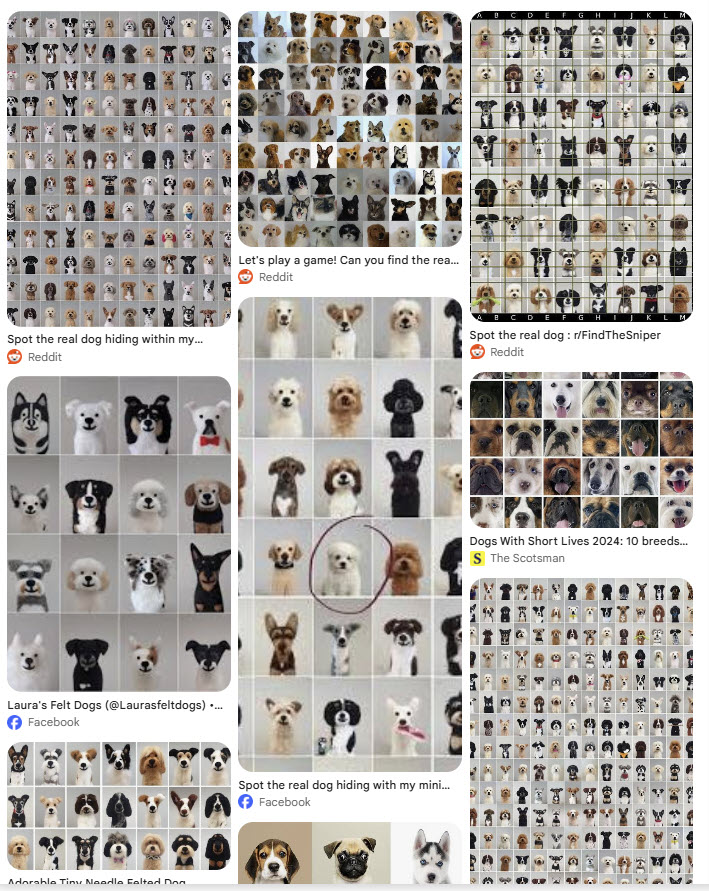
Real Living Dogs Images 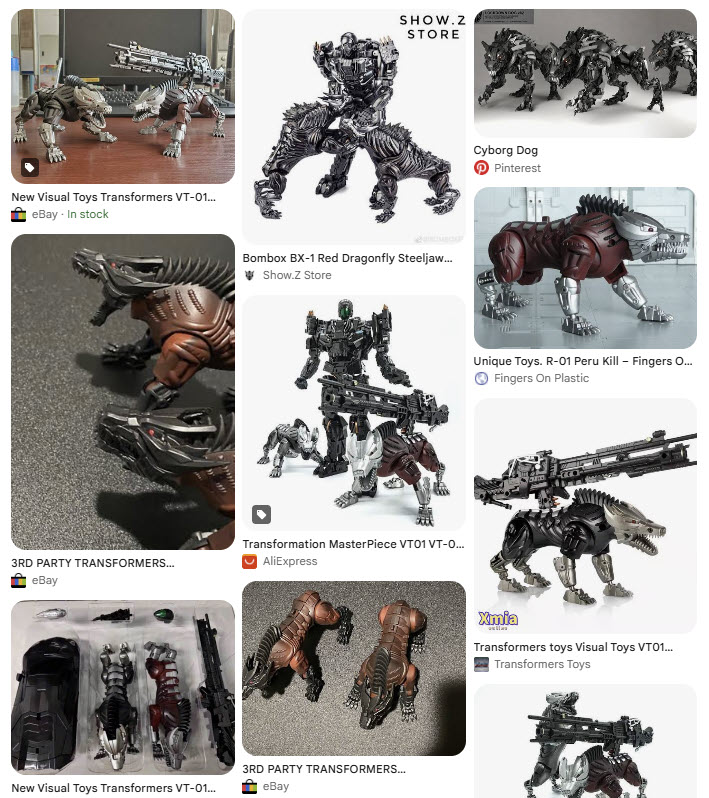
Transformers Toys dogs Images There are over 340 globally recognized dog breeds, which translate into millions of potential visual shapes, sizes, and color combinations. Because dogs are the most physically diverse land mammals on Earth, their shapes range from the tiny, flat-faced Chihuahua to the massive, long-snouted Great Dane. As for the number of images of toy dogs that we can have: There is no limit to the number of images of toy dogs you can possess or collect. Whether you are generating AI pictures, saving photos to your device, or collecting physical figurines, there is no limits. AI Training and Labeling Processes Pros and Cons: AI Manual Labeling: Manual data labeling is the process where humans review and annotate raw data (like text, images, or audio) with descriptive tags to create accurate training datasets for machine learning. It remains the gold standard for high precision and handling complex edge cases, even as AI models improve. AI Automated Labeling: AI Automated Labeling is the use of pre-trained machine learning algorithms to automatically assign tags, categories, or annotations to raw data (like images, text, audio, or video). It drastically accelerates dataset preparation for AI training by reducing the heavy reliance on manual, human-in-the-loop annotation. AI Hybrid Labeling: AI Hybrid Labeling is a data annotation strategy that combines automated AI pre-labeling with human review. It shifts human annotators from creating labels from scratch to simply verifying, correcting, and refining AI-generated outputs, which cuts annotation time and costs by up to 70% while maintaining high accuracy. The Cost of AI Training and Labeling: Accoricng to our Google Search: The cost of AI training and labeling varies widely depending on the complexity of the data, the expertise required, and the model scale, with high-quality human data often outpacing compute costs for frontier AI models. Budgeting requires accounting for human-in-the-loop annotations, platform tooling, quality assurance (QA), and infrastructure setup. AI System Training & Infrastructure Costs: Training an AI model involves massive upfront financial expenditures for compute infrastructure, data storage, tooling, and personnel. Small-to-Medium Models: $10,000 to $300,000 for initial model training, plus $3,000 to $30,000 for data cleaning and labeling. Large Frontier Models (e.g., GPT-4, Gemini Ultra): $50 million to well over $100 million for compute infrastructure alone. Data Labeling Pipelines: The largest AI labs can spend $1 billion to $2 billion per year on human-in-the-loop pipelines and data labeling. Our View of the actual Cost of AI Training and Labeling: We are presenting what we believe the actual cost (no Dollars amount) in term of the following: 1. AI Training and Labeling is static 2. Hidden Cost 3. Technical Labor needed and their cost 4. Storage and backups size - needs large storage 5. Needs tremendous analysis 6. No intelligence 7. Not transferable 8. Not reusable 9. Any changes would result in total loss of all efforts, storage, cost, ... etc. Our Simple Intelligence Approach and no Need to AI Training and Labeling: First, we need our audience to check the more details see our ML link listed on the top. To simplify our presentation, see the following images 1, 2, 3 and 4 
Image #1 Looking at Image #1, we need to ask the following: • How would Machine Learning find this specific Donald in the two toys bags? • How would Machine Learning find any toy which resembles Donald toy in the two toys bags? • Data Bias is where data is very much fabricated for the algorithms and models to succeed. • How to handle real world data and all of its complexities? Our Zeros and Ones Concept and Components: The basic concept of any computer is the binary bit (0,1). Computer Science was able to turn this binary 0s and 1s into a revolution of technologies that we are using today. With the same thinking, we use the concept of 0s and 1s to build search patterns. We would also use Dynamic Business Rules as guidance in building the search patterns. We build from Zeros and Ones a Byte, then use bytes to build a word and use words to build patterns. The best way to make our concept more clear is by present Donald toy as an example. The following images are Bits which would be used to build one Byte For Donald Toy: 
Image #2 The following would be some of possible Bytes which is built from these bits: 
Image #3 The Dynamic Business Rules would help in fine tuning the building of the Bytes, the Words, and finally the Target Pattern(s). The Target Patterns can be scaled, rotated, (side way, upside down, left, mirror image, etc) 
Image #4 Dynamic Build of Search Patters and not Static Label Images with Data Tag. Our audience need to understand that creation of thousands of Donald Duck Patterns is created on the run and can be deleted if not needed. No need to any labor and we would be to reduce the heavy reliance on manual, human-in-the-loop annotation. The saving in term of eliminating the actual cost listed above is tremendous and obvious. Differences Between Our AI Model-Agent and ML and the AI World's Ones: Our audience needs to understand that the main differences are: 1. We are developing a true intelligence system and not photographic memory system 2. We add Intelligence engines as needed and not a bulk of numerous processes 3. Their system is static and our is dynamic and ours is a lot smaller in size and number of processes 4. Theirs is very costly approach of using labels with tags 5. Their system is more of search pattens for images-labels and text 6. The amount of processing they are used in beyond what our system would need to process 7. The amount of storage and memory needed for system to perform are also tremendous 8. Our system is reusables and integrate-able easily into any system 9. Upgrading and adding intelligence in our system is very simple, just add more intelligence engines In short, our audience would be the judge of what we presenting and the future of AI and ML using our approaches and tools. System Analysis and System Development Documents: The main goal of System Analysis and System Development Documents is the intelligent automation of developing these System documenations and we need to present our approach to automation as follows: 1. What are these documents 2. Prerequisites for the development 3. Our Documentation Development Strategies 4. System Analysis and System Development Documents Factories 5. How they would help the next stage of system architect-design 6. Test the accuracy of these documents What are these documents: System Analysis Documents: System analysis documents are the foundational blueprints used to define, design, and implement a software or technical project. They bridge the gap between business needs and technical execution. The essential documents utilized in the standard software development life cycle (SDLC) include: 1. Requirements Documents • Business Requirements Document (BRD) • System Requirements Document (SRD) • Software Requirements Specification (SRS) 2. Analytical & Design Documents • Process Flow Diagrams / Flowcharts • Use Case Models • Software Architecture Document (SAD) • Data Dictionary & Entity Relationship Diagrams (ERD) 3. Implementation & Operational Documents • Test Plan / Test Cases • User Manuals & Training Guides Business Analysis Documents 1. Planning & Strategy • Business Case • Business Analysis Plan • Stakeholder Register 2. Discovery & Analysis • Current State (AS-IS) Analysis • Gap Analysis • Process Flow Diagrams 3. Requirements Documents • Business Requirements Document (BRD) • Functional Requirements Document (FRD) / Software Requirements Specification (SRS) • Non-Functional Requirements (NFR) • User Stories / Use Cases • Data Dictionary 4. Tracking & Execution • Requirements Traceability Matrix (RTM) • Change Request Log • UAT Test Cases System Development Documents: System development documents are essential records created during the software development life cycle (SDLC) that outline the requirements, architecture, and maintenance processes of a project. These files ensure that all stakeholders are aligned and that engineers understand the underlying technology. The essential documents are typically categorized by the stage of development: 1. Requirements Phase Documents • Business Requirements Document (BRD) • Product Requirements Document (PRD) • System Requirements Specification (SRS) • Functional Requirements Document (FRD) 2. Design & Architecture Documents • System Design Document (SDD) • Interface Control Document (ICD) • Database Design Document 3. Implementation & Testing Documents • Software Development Plan (SDP) • Software Test Plan (STP) 4. User & Process Documentation • User Documentation • Process Documentation Prerequisites: Project requirement, templates, ML engines, added intelligent engines and AI Chatbots are the "Prerequisites" for the development automation of these documents. Our Documentation Development Strategies: Our audience needs to understand that so far, we covered the following topics-processes: 1. Requirement Documents 2. Templates and Templates Banks 3. Our Zeros and Ones Concept and Components 4. Our Machine Learning Engines 5. Added Intelligence Engines 6. Accessing-Using Big Data 7. Big Data Values Tables 8. Long Integer Conversions - Data Matrices At this point we do have all the needed resources and intelligence processes to start developing System Analysis and System Development Documents. System Analysis and System Development Documents would be using their perspective templates found in the Templates Banks. Our ML Engines and Added Intelligence Engines would perform all the needed tasks to develop System Analysis and System Development Documents. In short, it would be fill-in the blacks kind of processes, where ML Engines, Added Intelligence Engines, AI Chatbots would be populating the corresponding templates for each document. Our Software Factory Approach would be the structured pipeline for developing these documents. System Analysis and System Development Documents Factories: Software Factory Approach: The software factory approach shifts documentation from a sluggish, manual task to a continuous, industrial-style pipeline. Key components of this system include: 1. Factory Plans 2. Frameworks 3. Requitment Documents 4. Big Data Values Tables 5. Long Integer Matrices 6. Templates - Templates Banks 7. Reusable Components 8. Intelligent Automation 9. ML Engines 10. Added Intelligence Engines 11. AI Chatbots 12. Testing We need to address the fact that we have two distinct-separate-different factories: 1. Developing System Analysis Documents 2. Developing System Development Documents What are the differences between System Analysis Documents and System Development Documents? System Analysis documents define: what does a system need to do to solve a business problem, focusing on requirements, user needs, and feasibility. System Development documents detail how to: build and implement the software, outlining system architecture, database plans, and code structures. 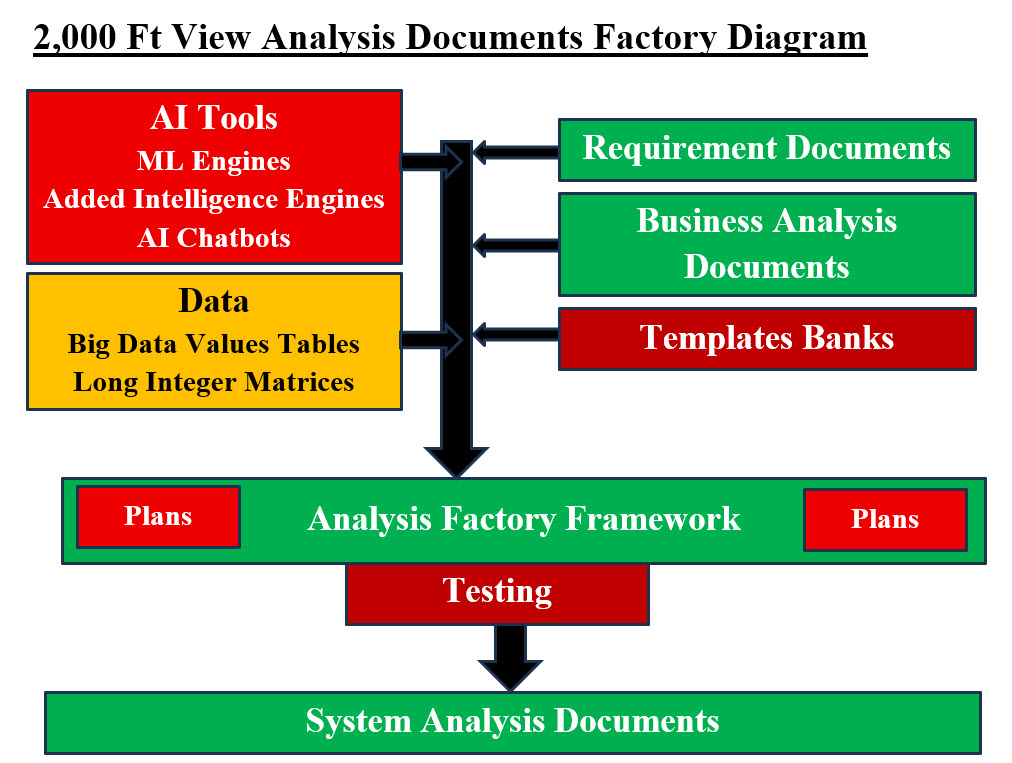
Image #5 Image #5 presents a rough picture of a 2,000 ft view of our automation of System Analysis documents development. Our automation approach uses AI tools, data, requirement documentation, business analysis documents, templates banks, plans, analysis factory framework(s) and testing. Our software factory approach develops all the needed documents for next stage of architect-design. 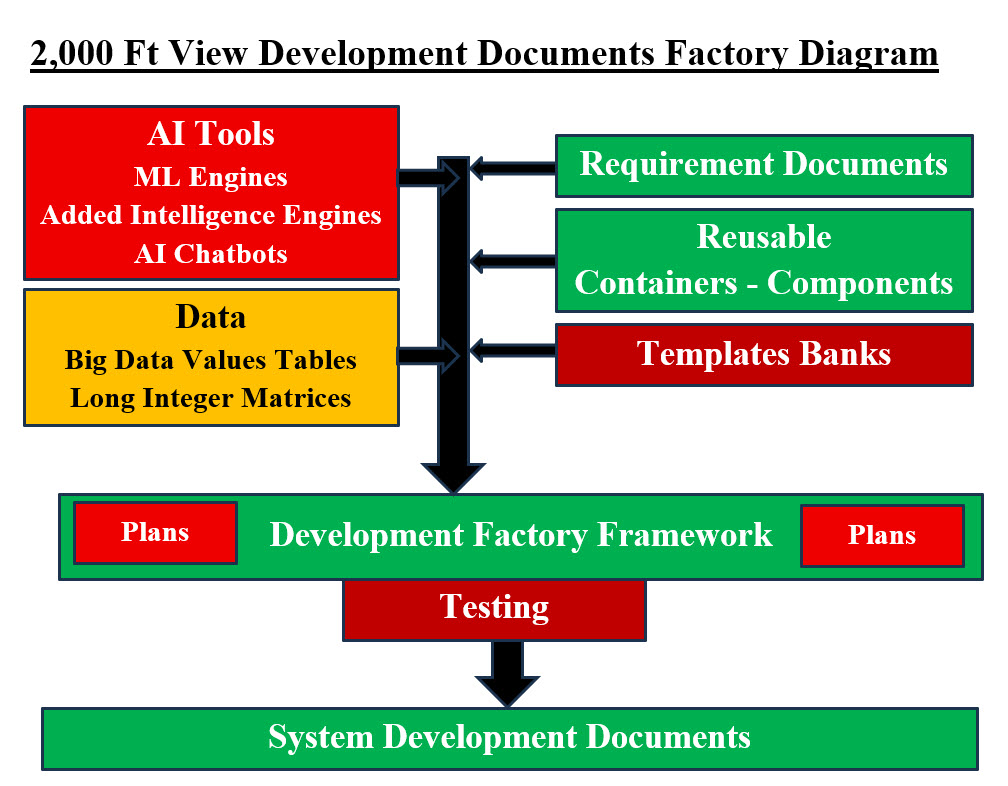
Image #6 Image #6 presents a rough picture of a 2,000 ft view of our automation of building of System Development Documents. Our automation approach uses AI tools, data, requirement documentation, reusable containers-components, templates banks, plans, analysis factory framework(s) and testing. Our software factory approach develops all the needed documents for next stage of architect-design. Note: Reusable containers-components are used in the place of business analysis documents. Software Factory Plan, Algorithms and AI Processes: Software Factory Plan A software factory plan is a structured blueprint for: 1. Organizing 2. Standardizing 3. Automating software development 4. It combines reusable assets, automated pipelines 5. Defined processes to build applications efficiently Algorithms: An algorithm is a step-by-step set of instructions or rules used to solve a problem or accomplish a specific task. Much like a cooking recipe, it takes an input, processes it through a logical sequence of actions, and produces a defined output What is the difference between software factory plan and algorithms? A software factory plan is a business process blueprint for making software apps, while algorithms are the specific math rules and step-by-step logic used to solve a problem inside that code. What is an AI process? An AI process is a structured workflow where machines use data, algorithms, and models to mimic human intelligence. Instead of following hard-coded, step-by-step instructions, it ingests raw information, detects hidden patterns, learns from feedback loops, and automatically generates predictions or content. ML Engines, Added Intelligence Engines and AI Chatbots would be the AI agents performing all the needed documents development. How Would System Analysis Documents Help the Next Stage of System Architect-Design? How Would System Development Documents Help the Next Stage of System Architect-Design? What is Architect-Design? Architect-design is: 1. Building the system structure to address system requirement 2. Add functionalities to the structure to address the clients' needs 3. Add the system security 4. Add the system testing In short Architect-design is creating the system picture for developers and testers to start coding and testing the target system. Where does AI fit in the software Architect-design phase? AI as a tool would help in: 1. Documents parsing 2. Automating tedious tasks 3. Automating developing documents 4. Help in cross-reference documents and values 5. Check for errors 6. Speed the processing Core Principle of Development of Programming Language Compiler: The core principle behind the development of a programming language compiler is: The systematic translation of high-level, human-readable source code into equivalent, machine-executable target code without altering the program's underlying logic or meaning. 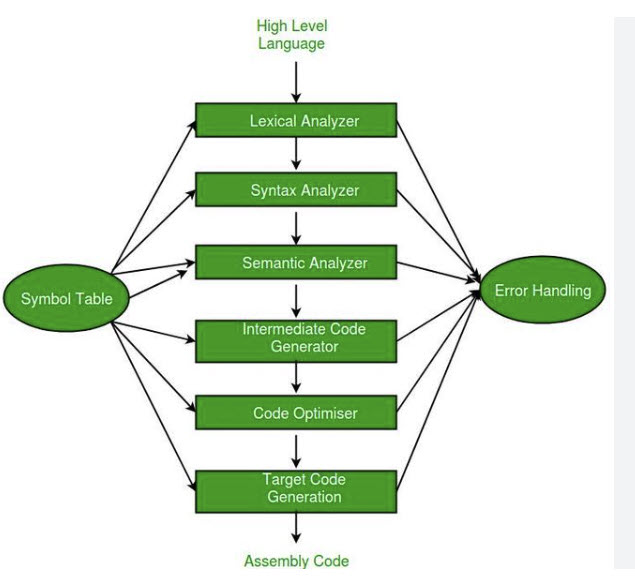
Image #7 Images #7 presents the principle of Language Compiler which translates high-level, human-readable source code into equivalent, machine-executable target code. With the same principle and approach our System Analysis and System Development Documents approach would be able to generate all the System Analysis and System Development Documents. Our Architect-Design Traversing Tree would be developing the all needed system architect-design. To achieve this complex translation, a compiler relies on a structured pipeline split into two primary components: • Analysis (the front-end) • Synthesis (the back-end - Code Generation) The concept-approaches of Compiler analysis and Synthesis would be used by software Architect-Design Traversing Tree to develop system structure (containers-components) and system functionalities. Software architects-design systems would be borrowing two main ideas from compiler design: Analysis and Synthesis: 1. Analysis breaks down the system's needs 2. Synthesis builds the actual software structure Using a Tree Traversal, the architect moves through the system's goals to map out containers, components, and features Testing the Accuracy of These Documents: At this point in the game where we literally have gone through so many phases and produced lots of documents. We need to stop and look at (at high level) what we have and check to see: • What have we accomplished so far? • Are we achieving our goal of intelligence and automation? At this high level we should have the following sets of documents System Analysis and System Development Documents The following System Analysis and System Development Documents Table presents a high level of sets of documents (no details of subdocuments):
System Analysis and System Development Documents Table makes it clear of what we have so far and now we need to start testing our System Analysis and System Development Documents. We can see from the documents names that our ML Engines as well as AI Chatbots would be able to check for errors, redundancies, and values. We recommend the following processes: 1. Using AI to compare the documents with similar templates documents 2. Using AI to compare the documents with existing system which is running in production 3. Using Reverse Engineering approach to see if these documents would produce: 3.1 Requirement documents 3.2 Analysis Documents Architect-Design In this architect-design, we are translating system analysis and development documents into: 1. Structure of containers and components 2. The system functionalities 3. Security Once we have all System Analysis and System Development documents, then the questions here would be: 1. What is architect-design? 2. Find our all the possible ways of creating the system architect-design? 3. What is the best practice of creating Architect-Design? 4. Which are AI processes used? 5. Using Traverse Tree What is an AI system architect-design? An architect-design system is a comprehensive blueprint that bridges abstract requirements with tangible implementation. It translates stakeholder needs into a structured, scalable whole by defining physical frameworks, core functions, AI capabilities, and user touchpoints. An architect-design system is composed of: 1. The physical structure 2. Functionalities using the physical structure 3. AI implementation 4. User interfaces 5. Security An AI system architect-design definition refers to: 1. Complete framework – containers and components 2. Implement ML models within the infrastructure 3. System process used to: a. Develop Infrastructure b. Implement ML models within the infrastructure c. Connections - Communication d. Administer-run AI components within a larger software or enterprise environment. e. Integrates data pipelines f. Develop user interfaces into a seamless operational system System Architect-Design Type List: What are ways of creating the system architect-design from System Analysis and System Development documents? A System Architecture Design can be created from both System Analysis and System Development documents in several ways, depending on the methodology, level of detail, and architecture framework used. We Would group Architect-Design-Driven into the following categories: 1. Object 2. Business 3. Services 4. Data 5. Events 6. Performance 7. Security 8. Infrastructure 9. Domain What are the best practices of creating Architect-design? The best practice of creating the system architect-design from System Analysis and System Development documents: We basically searched the internet for the answer to this question, and sadly, there is a lot of views but almost all them has listed the following categories or what is known as "end-to-end" architect-design: 1. Business Requirements 2. System Analysis 3. Architecture Analysis 4. System Architecture Design (SAD) 5. Detailed Design 6. System Development 7. Architecture Validation Which are AI processes used in the creation of software architect-design? AI processes also include: 1. Graphic Analysis 2. Voice-to-text 3. Errors checking 4. Content Creation 5. Data Prediction 6. Pattern Sorting 7. Image generation 8. Language translation 9. Sentiment analysis 10. Facial recognition 11. Recommendation systems 12. Anomaly detection Architect-Design Traversing Tree: What is Architect-Design Traversing Tree? An "Architect-Design Traversing Tree" is a combination of three computing and engineering concepts: • Software Architecture • AI Model and Agent Architect-Design Traversing Tree • Tree Traversal algorithms Architect-Design Traversing Tree Definition: Tree traversal is the process of visiting or accessing every node in a tree data structure exactly once. Because trees are non-linear, nodes can be visited in multiple ways. The two main categories are Depth-First Search (DFS) and Breadth-First Search (BFS). Multi-Pass Traversal Tree Definition: A multi-pass tree traversal is an algorithmic process that walks or visits the nodes of a hierarchical tree data structure more than once across distinct, sequential phases. Instead of extracting or computing everything in a single walk (single-pass), the algorithm uses information gathered in earlier passes to guide processing, optimization, or evaluation in later passes. How Architect-Design Traversing Tree are used in complier architect-design? Tree traversal in compiler architecture is the process of visiting every node in a syntax tree to analyze, optimize, or translate code. The key steps are semantic analysis, code generation, and optimization. In compiler design, the Parse Tree depicts the syntactic structure of a string in accordance with a given grammar. It was created during the parsing phase of compilation, wherein syntax of the input source code is analyzed. A parse tree is a useful way of showing how a string or program would be derived from a grammar. It does this by breaking down components of that string into smaller units, showing the detail about the grammatical structure that was employed in its creation to obtain an input string. This is a crucial step in syntax validation to allow other steps such as semantic analysis and code generation to proceed with success. Pros and cons of using traverse tree? Tree is a non-linear data structure. It consists of nodes and edges. A tree represents data in a hierarchical organization. It is a special type of connected graph without any cycle or circuit. Advantages: 1. Efficient searching 2. Fast insertion and deletion 3. Trees provide a hierarchical representation of data 4. Making it easy to organize and navigate large amounts of information 5. The recursive nature of trees makes them easy to traverse 6. Manipulate using recursive algorithms 7. Natural organization 8. Flexible size Disadvantages: 1. Memory overhead 2. Imbalanced trees 3. Search, Insert and Delete Times 4. The implementation and manipulation of trees can be complex 5. Require a good understanding of the algorithms. Our Multi-Pass Traversal Tree: Why should we use Traversal Tree in our Architect-Design Development? Developing a compiler in our experience had given us the chance to see the power of parsing and synthesizing a programming language. All the compiler development processes are very complex and requires knowledge and experiences which force the architect-design-programmers-testers to think in ways such as parsing and synthesizing a programming language. Multi-Pass Traversal Tree: Rather than producing everything in one pass, use multiple traversals to add containers-components, algorithms, and AI processes as needed. 1. First pass - Containers-Components 2. Second pass - Algorithms 3. Third pass - AI Processes Our readers and audience need to check previous section of: "What is an AI system architect-design?" An architect-design system is a comprehensive blueprint that bridges abstract requirements with tangible implementation. It translates stakeholder needs into a structured, scalable whole by defining physical frameworks, core functions, AI capabilities, and user touchpoints. What we presented so far is our logical approach in turning System Analysis and System Development documents into system architect-design. Our approach is not simple, nor short, but requires breaking down the traversing into phases. These phases build the architect-design where each phase adds the needed containers-components, algorithms and AI processes. The analogy of such phases is like a person shopping and purchases the bases components. Once these components are collected, then he starts the next items which would be needed to run theses components. Afterword, he starts adding the needed items which would finish the tasks or the goals. What are Goals of Our AI Architect-Design Processes? Our AI Architect-Design Processes have the goals of creating system tiers, then these system tiers are converted into Software Containers. What is the relationship between software containers and architect-design processes? Architect-Design Processes and Software Containers share a close relationship as follows: 1. Containers act as physical-like building blocks that enforce modularity, automate deployment 2. Containers ensure consistency from design to production 3. Architects use containers to align system design with operational reality 4. Single responsibility where each container runs one clear function or service 5. Clear boundaries where containers define strict limits for code and data 6. Containers provide Consistency and Portability 7. Virtual containers would help several operations and Scaling Our AI Tailored Virtual Butler Project: Our AI Tailored Virtual Butler Project is one of the answers in helping the elderly with cognitive challenges. In short, our AI Tailored Virtual Butler would be helping elderly with every day task including elders' finances, physical security and physical training. The following is link to our Sam Eldin's AI Tailored Virtual Butler Project - Architect-Design: AI Virtual Butler Project Architect-Design We recommend that our audience check the link and see for themselves the tiers-containers section. System tiers and project containers refer to the structural layers of software applications and the isolated runtime environments used to package and run them. 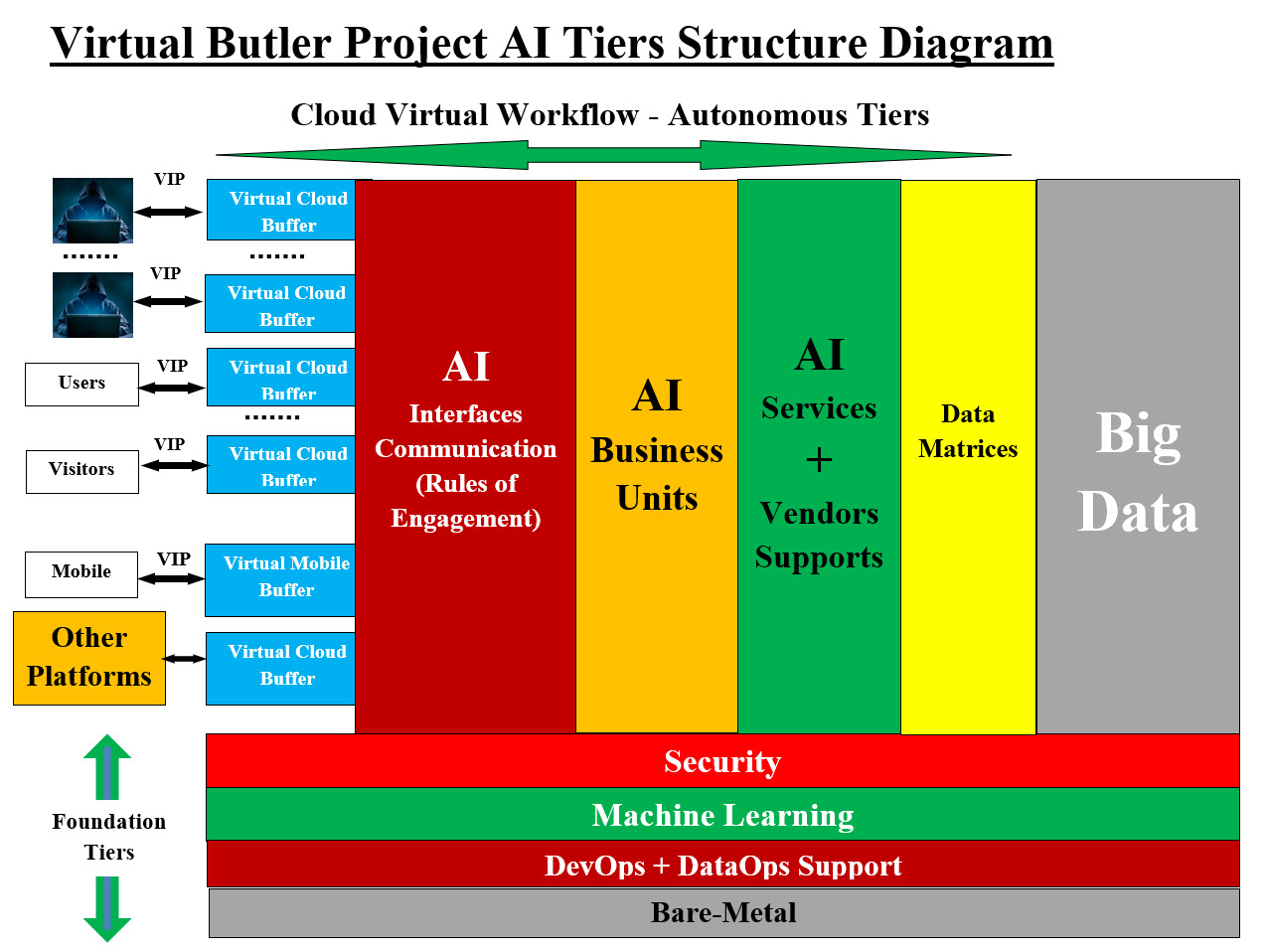
Butler Project AI Tiers Structure Diagram Image #8 Butler Project AI Tiers Structure Diagram Image #8 presents a rough picture of our Butler Project AI Tiers Structure. These tiers would be developed using system enterprise abstraction layers. Each tier has its unique tasks and some of these tiers may contain AI autonomous containers-components. Tiers to Containers: Organizing a project into functional tiers separates responsibilities, while containerization deploys each piece reliably across different machines. We need to structure the entire system tiers into containers with the following categories: 1. Autonomous Tiers 2. Foundation Tiers 3. Workflow Tiers 4. Common 5. Utilities See Butler Project Tiers and Containers section for more details. Development: Automating Programming: On a personal note: I started my IT career as a C developer developing systems for insurance companies. My story started with the fact that the insurance actuarial department used excel spreadsheets, and we as developers translated their spreadsheets into running software. At that time, there was noting called integration. Basically, every software system (IBM, Apple, AS400, VAX, ...) had its own unique C programming compiler system. Therefore, developing any software in one system, the C code for that system would not run on other systems. It must be recompiled on the other system to be able to run plus we would also have unresolved issues. Not to mention, there was no such thing as Object Oriented Programming. My goals and dreams at that time was to build a software consulting company developing insurance systems with GUI interfaces and bypass the all the old system starting AS400. I can only say that I was lucky to live such tough days, since I had to develop modular components (these are basically Containers-Components) which we put together into a complete system and then recompile it with the target C-System Compiler. It was not easy, but we were successful some of the time, but not all the time. With the same concept of developing modular components (Containers-Components), our programming automation is very much fill in the blanks. The question where would be how? Once we have built, barrowed, copied, outsourced our (Java, Python, ...) classes-libraries of programming modulars. At this point, we have "Enough Code" for every possible the system Containers-Components, but we need to create (with help of AI) the automated development tools for just "file-in-the-blanks." Personal Note: The following paragraphs were posted in the Sam Eldin's AI Tailored Virtual Butler Project pages under Butler Project Tiers-Containers-Components Testing Architect-Design to keep our presentation consistence: Being a one-man-show with almost zero resources, where I was the: manager-architect-analyst-developer-tester-graphic artist-admin, ... and everything between forced me to think in ways which shaped my skills for life. For example, I have to think in parallel and as I was programming-coding, I was also debugging and testing in my head. I did a lot of notes writing for both debugging and testing processes as I was coding. Another issue when programming for clients where testing was outsourced, we as a developing team had to writeup notes to the outsourced testers to make their life easier. Another testing issue is the fact the testers would be creating testing scripts for each component to test them. This is very difficult and costly processes for any project. Testers have to identified a major bottleneck where testing happens too late in the cycle and that creates a heavy technical burden for any team. Issues: • Delayed testing which would begin only after coding is finished • Big learning curve where testers would waste a lots of time reading and understanding the code • Codebases are difficult for writing test scripts • Code changing would require changes to the existing test scripts, forcing testers to rewrite them constantly • As for maintenance, the more complex codebases is the more difficult for writing test scripts Tiers Testing Strategy: We believe that testing scripts should be done with coding and automation can make such effort easier and coherent. Therefore, we need to develop the following for coding and testing automation processes: Template Banks: Create banks of templates of coding, testing script and use cases We would be using the templates banks for creating the testing scripts after the development of each component. Early Testing: At tier architect-design and development stage, testing would be easy and not done at the end of developments. Tier Integration Testing: Tier Integration Testing would be done at the end or based on the system criteria.
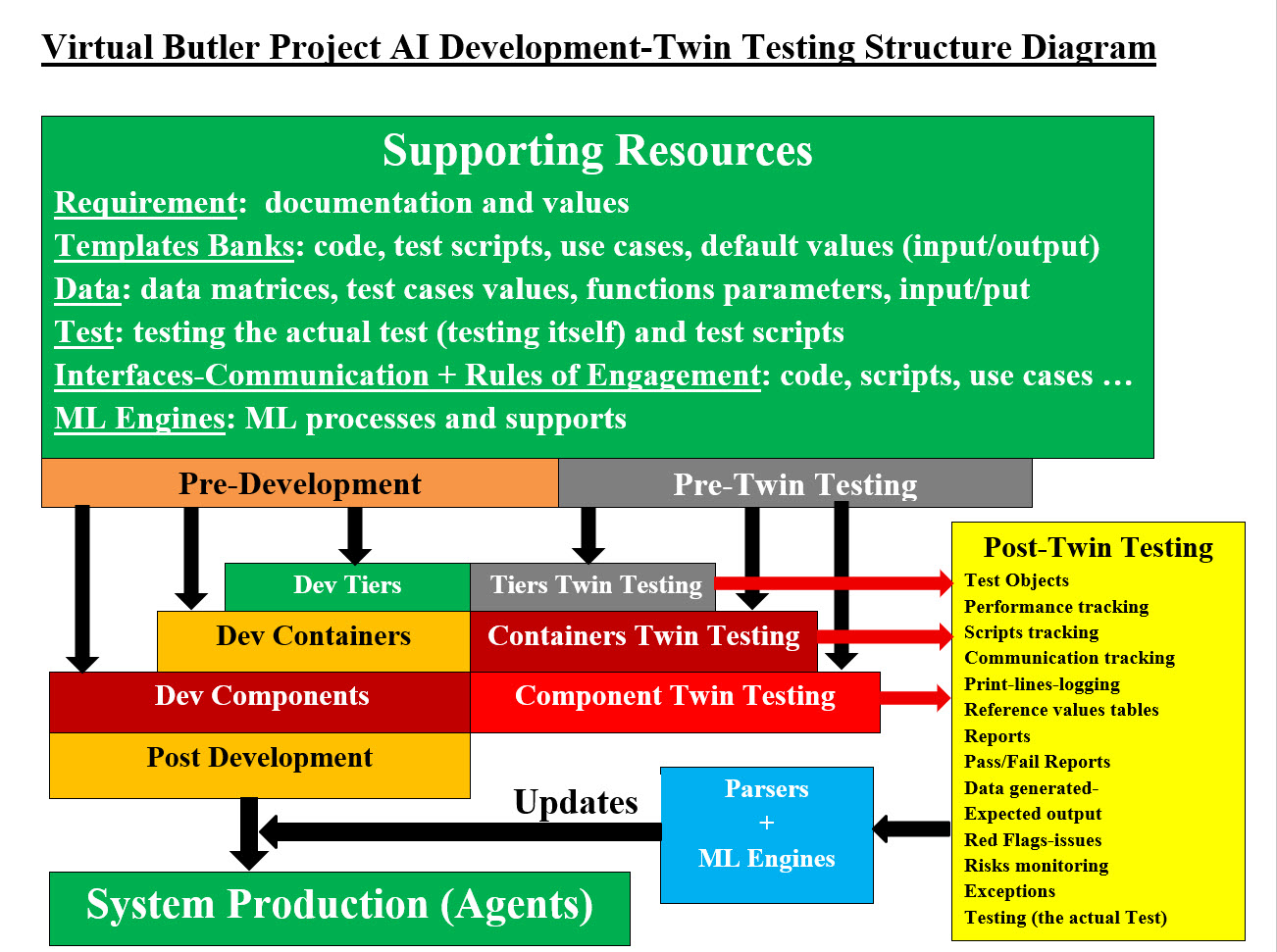
Architect-Design Tiers Vs Testing Tiers presents Architect-Design Tiers Vs Testing Tiers Images present the comparison between architect-design and Testing. Testing Becomes a Twin of Development: We can comfortably say that testing would be a "Twin of Development" since our approach is to develop the components and at the same time to develop the testing scripts. The goal is automation of the Software Development Life Cycle (SDLC). Now, all we need to do is developing an intelligent system which would convert these Containers-Components into the target running system or subsystems and develop the components testing scripts. Automation is The Key: Creating templates banks of coding, testing script and use cases which would be used for creating the testing scripts following the development of each component. We can also use Traversing Trees Compiler-builder-factories which take Containers-Components and translate them into a running system. Lego Blocks Concept: 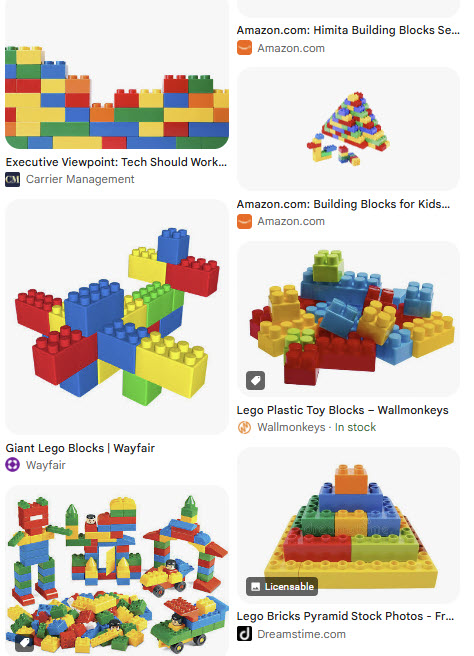
Lego Concept Image #9 Image #9 is our quick Google search for Lego images which show the concept of building modules from simple blocks. With AI chatbots and their mathematical programming power, these components or modules is a walk in the part. The main goal is integrating these components into running system which can be easily tested. How can we automate development-programming? By breaking down the Software Development Lifecycle (SDLC) into discrete, repeatable tasks and applying specialized automation tools, AI assistance, and Continuous Integration (CI) / Deployment and Infrastructure (CD) workflows to eliminate manual intervention. Modern software automation spans everything from planning to code generation, quality gates, and live deployments. There is a number of ways to automate development as follows: 1. Using chatbots or outsource the programming 2. Using Traversal Trees 3. Templates-Driven coding 4. Misc. – we are open to other options Simple Example of Traversing Tree (multi-pass): Let assume we have a container which looks for words in text files. Container = 1. Search for a word in text files Components = 1. Open input files 2. Search for the word 3. Write to output files 4. Vanilla Testing of the code The following would the traversing loop: TRAVERSING_LOOP { PARSING_CONTAINER_CONSRANT_INDEX: { //Here we break the container into components ... Break; } PARSING_COMPONENT_CONSTANT_INDEX: { //Here we break the component into functions-code ... Break; } STARTING_CODE_INTEGRATING_INDEX: { // add the actual code Break; } VANILLA_TESTING_INDEX: { // test using vanilla (simple) cases Break; } ContainerTestScript { ... } CONTAINER_TEST_STATUS_STRING = NULL; } The Traversing Loop presents how development of code would be performed. The loop will parse the container and develop the required components. The components would be parsed into classes, functions and data structure. There is a validation test, which is a simple test that runs the container-components code. As for "ContainerTestScript" is Unix-Linex-Windows script which would run the container application. As for: "CONTAINER_TEST_STATUS_STRING = NULL;" it is a static string which the container would have and every component running would be appending to the string the following: Component Name + ID + component running status The "ContainerTestScript" would get a copy of such string and start parsing it, looking for that status of each running component within the container and create a test status report. Development First Testing: what are first software development testing? The first and earliest stage of software testing in the development cycle is Unit Testing, where developers test individual small components, blocks of code, or functions to prove they work correctly on their own before anything is combined. Early Software Testing Stages: 1. Unit Testing 2. Component / Module Testing 3. Integration Testing Since we are developing automated architect-design-development system, then we also need to create automated testing which would replace the known early testing such as unit testing. Twin Testing Tiers-Containers-Components: Our AI Virtual Butler Project Architect-Design webpage has a section called: Butler Project Tiers-Containers-Components Testing Twin Architect-Design: Our Architect-Design-Testing Twin Tiers: Architect-Designing testing twin tiers that mirrors our AI system's architectural layers is our way to solve the late-cycle testing bottleneck. By creating a parallel testing architecture, we can test each layer independently and continuously. We are architecting-designing a parallel testing architecture that mirrors our AI system tiers. Essentially creating a "shadow" testing structure that operates alongside our production AI tiers. We are not following the traditional post-hoc testing. Our approach is to use templates, code modules (banks) and/or any code which applies to develop the system tier-container-component and at the same time the testing twin would automatically be developing the needed scripts to test the tier-container-component. Plus, the testing twin would be building matrices of: 1. Input data 2. Possible output 3. Function parameter passing Our approach shifts testing from a reactive, late-stage activity to an inherent byproduct of the architecture itself. By binding a "Testing Twin" to our architectural templates, code modules, and containers, we are effectively turning our system's blueprints into automated test generators. For example, credit card software component and testing script: A physical credit card consists of several distinct visual, physical, and digital components designed for identification, processing, and security and their testing scripts for a Credit Card Payment Processing software component, can be broken down by testing scripts. The goal is to automate the architecting-designing and parallel testing. AI Coding and Using "printline" and Logging: Using print statements or console.log lines is a fast, effective way to debug and trace AI-generated code. Pros and Cons of using print statements or console.log lines Pros: 1. Verify Execution Path 2. Inspect State 3. Isolate Bugs 4. Use proper log levels Cons: 1. Must have a strategy and plan otherwise may lead of overkill of statements 2. Slaws the system 3. Should be removed from production code 4. Writing to a file may results to have a big file that would crash the running system 5. Must remove or comment them out One Option - Using a static function to track: For example, let us create: "samPrintline(...)" It would be tracking containers-components-functions-remote call. ... This method would be used in the tracking-bugging. The call-statement would be running in testing only, otherwise it should be commented out. Then, it would be commented out in the other tests or production. int result = samPrintline(parameters ...); commented using line comment // int result = samPrintline(parameters…); This way it would be easily eliminated out of production file size and executions. The goal is to automate the commenting and uncommenting using test editor. This way, we can easily manipulate "On/Off" testing of all the containers and components by simply using the text editor to perform the commenting and uncommenting as needed. The samPrintline function would have the code for tracking, writing to tracking files and making sure that each file size would exceed a certain size. This would prevent system crashing from oversized files. Int samPrintline(parameters) { Static_globale_count++; If(count < FILE_SIZE_LINE_COUNT) { start a new file - to keep the file manageable to prevent system crash} Printlin(local_tracking_code) Return(0); } The output tracking files would be parsed for checking system performance. The same concept can used in passing parameters to the tested code. "Code Execution Map" Files: How critical AI Coding and Using "printline" and Logging in automated Testing? Both using "printline" and Logging can be used to provide a map of the execution of each function and every critical code into test files. Let call these files the "Code Execution Map". These files would be parsed to figure out: 1. Security issues 2. Errors 3. Issue with execution sequences 4. Follow the application structure 5. Bugs 6. Activity Tracking 7. Troubleshooting 8. Performance Monitoring 9. Track Input 10. Organize output 11. Check the math-algorithms "Code Execution Map" files would be the first step-process in Automating Testing. Automating Software Container Testing: Automating software container testing is the practice of embedding containerized environments into: 1. Continuous integration (CI) pipelines 2. Automatically validate tier applications and their dependencies 3. Eliminates the works single machine problem by ensuring your testing environment precisely mimics production 4. Eliminates environment configuration Template-Driven Coding: Template-driven coding typically refers to two main concepts: 1. Software patterns where logic or user interfaces are driven by predefined templates 2. Code generation practices where structural models' templates automatically generate repetitive system code How does AI help with system development automation? AI automates and accelerates system development: 1. Handling repetitive coding 2. Predicting errors 3. Streamlining testing 4. Code reviews 5. Deployments across the software development lifecycle (SDLC) 6. DevOps and Infrastructure 7. Legacy Modernization Traversing Programming Development Tree(s) including: 1. System Programming Traversing Tree(s) 2. DevOps Programming Traversing Tree(s) 3. APIs Programming Traversing Tree(s) Development Becomes Fill-in-the-Blanks: We claimed that, once you have the tiers-containers-components, then Development becomes fill-in-the-blanks. We will to present our "Development becomes fill-in-the-blanks" as flows: 1. How Infrastructure Developers build scripts and code for developing servers and system scripts 2. Our personal experiences with cut/paste code for building Java Classes and application code 3. AI with its might-power-intelligence would be able to create code using "Development becomes fill-in-the-blanks." As a Java, C and Unix-Linx scripts programmer as well as working with other developers of all types and tasks, we would be doing the following when it comes to developing-coding new applications: First Step: We literally open already built applications looking for code and we would be using text search searching for code. Once we find such code, we cut/paste into a blank file. Then starting messaging such code to fit our target application. Also, we would be testing very rigorously to make sure we do not have any issues or bugs. The Second Step: We would be using Google search for the needed code Third Step: is calling friends to send us code which we need. If all the mentioned steps are not "fill-in-the-blanks", then I do not what else is. Our automated approach to development is very much using the same processes or steps we just mentioned. AI is definitely very much using our steps, but with speed and Hugh amount of preexisting code and fast integration. We asked Google: Software development becomes fill-in-the-blanks explained: Software development becomes "fill-in-the-blanks" process when AI coding tools, low-code platforms, and pre-built templates handle the heavy lifting of raw syntax, leaving humans to supply high-level logic, specific configurations, or targeted parameters rather than writing code from scratch. How It Works Today: AI Code Generation: Tools like GitHub Copilot auto-complete whole functions once you type a comment or a function name. Low-Code/No-Code: Platforms provide the visual framework where you only insert data fields and rules. APIs and Libraries: Instead of building features, you plug in ready-made services and supply your specific API keys or variables. Why This Shift Happens? Speed: It cuts down the time needed to ship basic features. Focus: Programmers spend less time on repetitive syntax and more time on business goals. Accessibility: More people can build simple software without a computer science degree. The New Role of a Developer: Architects: You design how the pieces fit together instead of hammering nails. Reviewers: You check the auto-generated code for bugs, security holes, and performance issues. Prompt Engineers: You write precise instructions to guide AI tools on what blanks to fill. Twin Testing: Personal Note (this note is repeated on other pages): Being a one-man-show with almost zero resources, where I was the: manager-architect-analyst-developer-tester-graphic artist-admin, ... and everything between forced me to think in ways which shaped my skills for life. For example, I have to thing in parallel and as I was programming-coding, I was also debugging and testing in my head. I did a lot of notes writing for both debugging and testing processes as I was coding. Another issue when programming for clients where testing was outsourced, we as a developing team had to writeup notes to the outsourced testers to make their life easier. Therefore, to me personally, testing is a twin of development. The question would be: How would testing be a Twin of development? For me, I had to have a picture of the application in my head as if I was on a top of a tree and I have to clime down each of the tree branches and examine each leave. The same thing would apply to a tester, and the tester has to have the same feeling as being on the top of tree which is the application and the tester has to visit each input field and out field in the application. Therefore, testing using Traversing Testing Trees requires the same programming-line-coding-thinking and tracking inputs and outputs. Testing Questions: We did a search on the internet looking software testing issues and Twin Testing issues also. We found the following questions: 1. What is needed when it comes to Automated Testing? 2. What is needed when it comes to Twin Testing? 3. What is the Performance parallel testing? 4. What is the cost of parallel testing? 5. Before we can start, testing twin must validate data integrity 6. What are you validating at each tier level, containers, and Components? 7. How to Flag Issues? 8. How do you handle incorrect values and AI outputs? 9. What would be the actual correct input/output? 10. How to handle data flow validation across tiers? 11. How to avoid the testing tiers itself becoming a bottleneck? 12. How to insure scalability? 13. Addressing Communications 14. Addressing rules of engagement 15. How to handle hallucination? 16. How to handle ambiguous results 17. How to handle probabilistic results We also need to Address the following tests: 1. Data validation 2. Model behavior tests 3. Invariance tests 4. Directional expectation tests 5. Minimum functionality tests 6. Performance regression tests 7. Fairness audits 8. Adversarial robustness 9. Online evaluation Our Testing strategy: Our Development and Twin Testing processes' strategies are: 1. Using Templates banks of code, test scripts, use cases, default values (input/output) 2. Make use of all the requirement documentation and values 3. Building data matrices of data, test cases values, functions parameters, input/put 4. Data validation processes 5. ML engines 6. Interfaces-communication and rules of engagement code, test scripts and use cases, 7. Parallel development and testing 8. Flags-exception generation of any running tiers-containers 9. Integration testing as needed 10. Use items ID, tokens, parameters as tracking which are collected in files to be parsed and evaluate the running and Testing system for validation of tiers-containers-components-test scripts 11. Performance tracking 12. Scripts tracking files, (printlines and logging) 13. Rollbacks and recovery processes 14. Test the testing processes and test scripts 15. Tracking AI hallucination 16. Measuring success 17. Lessons learned 18. Risk evaluation
Virtual Butler Project AI Testing Tiers Structure Diagram Image Virtual Butler Project AI Testing Tiers Structure Diagram Image presents a rough picture of both the development and Twin Testing architect-design. Our Architect-Design-Testing Twin Tiers are creating a parallel twin testing architecture. We can test each layer independently and continuously. The same thing would apply to containers, components and their respective Twin Testing. For more details see the following link: AI Virtual Butler Project Architect-Design Automating Testing: "Code Execution Map" Files: Code Execution Map Files are developed in the early testing phase or process in the development. Based on their parsing, then the next step in Automating Testing is to correct all the issues and concerns. Such process can be automated and AI would help in these cases. For more details see the AI Virtual Butler Project Architect-Design link above. Deployment: Deployment in AI is the process of integrating a trained artificial intelligence model into a live production environment. It bridges the gap between theoretical data science experiments and practical, real-world business operations, allowing end-users and software applications to interact with the AI to make data-based decisions. Deployment is the method by which you integrate a machine learning model into an existing production environment to make practical business decisions based on data. It is one of the last stages in the machine learning life cycle and can be one of the most cumbersome. We need to address the fact that we do need help with Deployment. Our main talent is AI and IT architecting-designing-programming-testing-modeling. |
|---|